|
| Morphology |
| Soma | |
| CA3:SR |
| Axons | |
| CA3:SP |
| Dendrites | |
| CA3:SLM | |
| CA3:SR |
| Representative figure |
|
Electrophysiological characterization of "giant" cells in stratum radiatum of the CA3 hippocampal region. Savic N, Sciancalepore M J Neurophysiol, 2001 May, 85 (5), pages: 1998 - 2007 PMID: 11353016; |
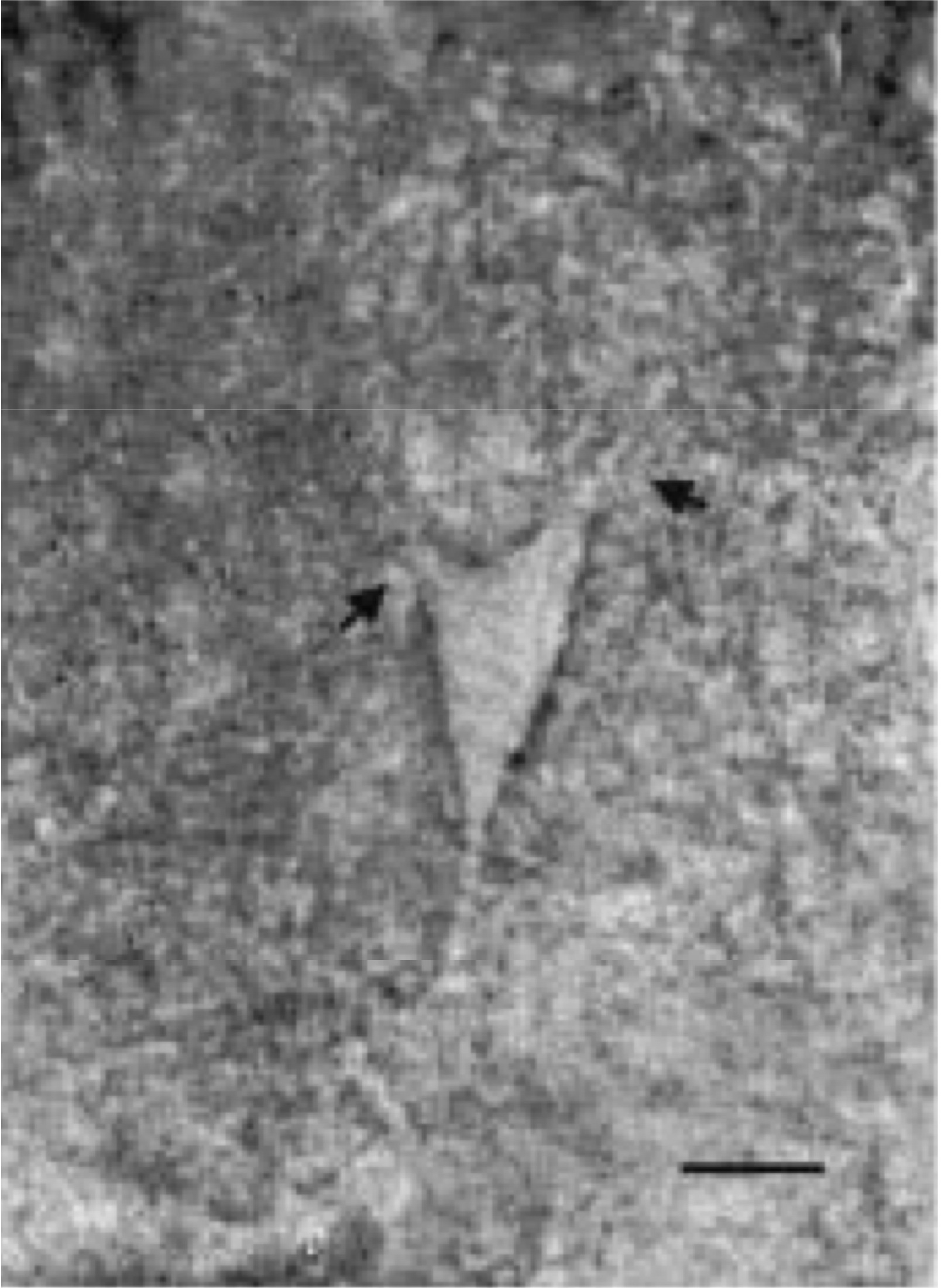 "FIG. 1. Morphology of CA3 giant {CA3 Giant} and pyramidal cells. A: infrared differential interference contrast (IR-DIC) image of a giant cell in stratum (st.) radiatum of a hippocampal slice. Note the apical dendrites running upward toward the st. lacunosum-moleculare. Calibration bar, 10 [micro]m. B: photomicrograph of a giant cell. Note the bipolar orientation and extensive dendritic arborization typical of these cells. The axon projected into st. oriens crossing the pyramidal layer (see arrows). Calibration bar, 50 [micro]m." |
| Molecular markers |
| Positive | |
| None known |
| Negative | |
| GABAa\alpha 6 (inference) | |
| PV (inference) |
| Mixed expression | |
| None known |
| Electrophysiological properties |
| Key: [range] OR representative value±SD (measurements); Number of sources (total measurements): [min , max] | |
| Resting membrane potential (Vrest): -57±1.2 mV (28); 1 source | |
| Input resistance (Rin): 595±224 MΩ (28); 1 source | |
| Time constant (τm): 67±23 ms (28); 1 source | |
| Threshold potential (Vthresh): 22 mV (1); 1 source | |
| Fast afterhyperpolaziring potential amplitude (Fast AHP): 14 mV (1); 1 source | |
| Action potential amplitude (APampl): 76±7.5 mV (28); 1 source | |
| Action potential width (APwidth): 1.1±0.1 ms (28); 1 source | |
| Max firing rate (Max F.R.): >50±3 Hz (13); 1 source | |
| Slow afterhyperpolarizing potential amplitude (Slow AHP): 7.1±2.4 mV (1); 1 source | |
| Sag ratio: 0.68 (1); 1 source |
| Notes |
| n = 7 out of 10. The authors do not speculate as to whether the cells are E or I, choosing instead to remark that the class has properties of both. Our best estimate is that they are excitatory. CA1 2201 RGCs also exist and are known to be excitatory. |
| Firing Pattern |
| Images | |
   |
| Parameters | View page | |
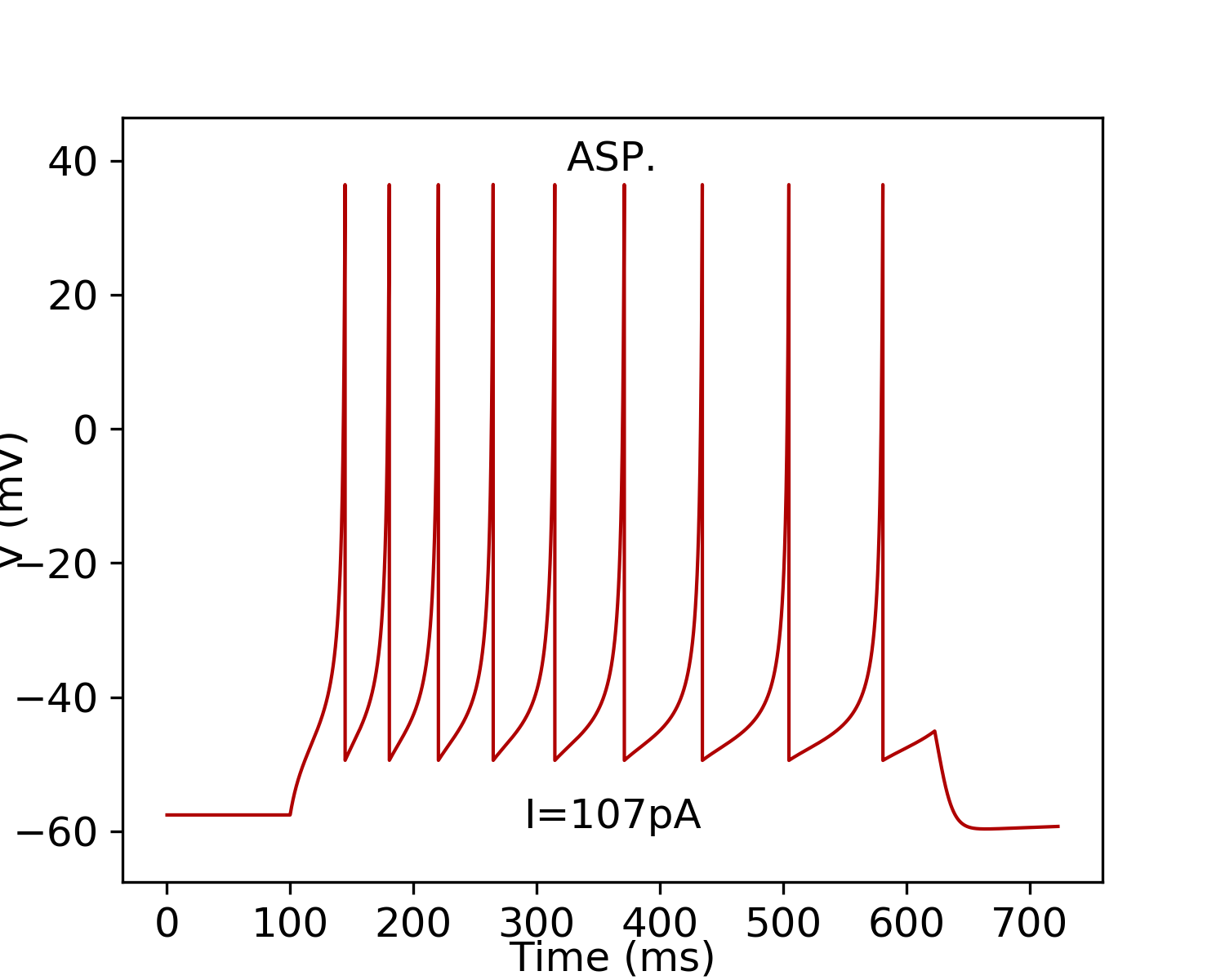
| ASP. | [Evidence] [Firing Pattern] |
| Izhikevich Model |
| Parameters | Single Compartment | Downloads | Simulate |
| subtype: 1 k=0.61;a= 0.004;b= 1.84;d= 2;C= 96;Vr= -57.58;Vt= -37.12;Vpeak= 36.42;Vmin= -49.45; | Simulate |
| Images | |
 |
| ModelDB Model |
| Model Accession Number | PubMed ID |
| Sources of Input |
|
|
|
| Targets of Output |
|
|
|
| Oscillation Phase Locking |
 Browse
 Search
 Help